Parlay Poker Schedule a call
Lockhart Laboratories
Parlay PokerTM

Proposition betting on poker hands — Learn it in seconds for hours of excitement

If you've played roulette you already know the basics. Parlay Poker is prop betting where everyone wagers on a shared poker hand, dealt as a three card flop. A bonus can extend it to five cards, bringing bigger hands into reach.

Replacing the ball with cards improves the core mechanic by offering more betting possibilities, multiple winning spots, and escalating tiered payouts.

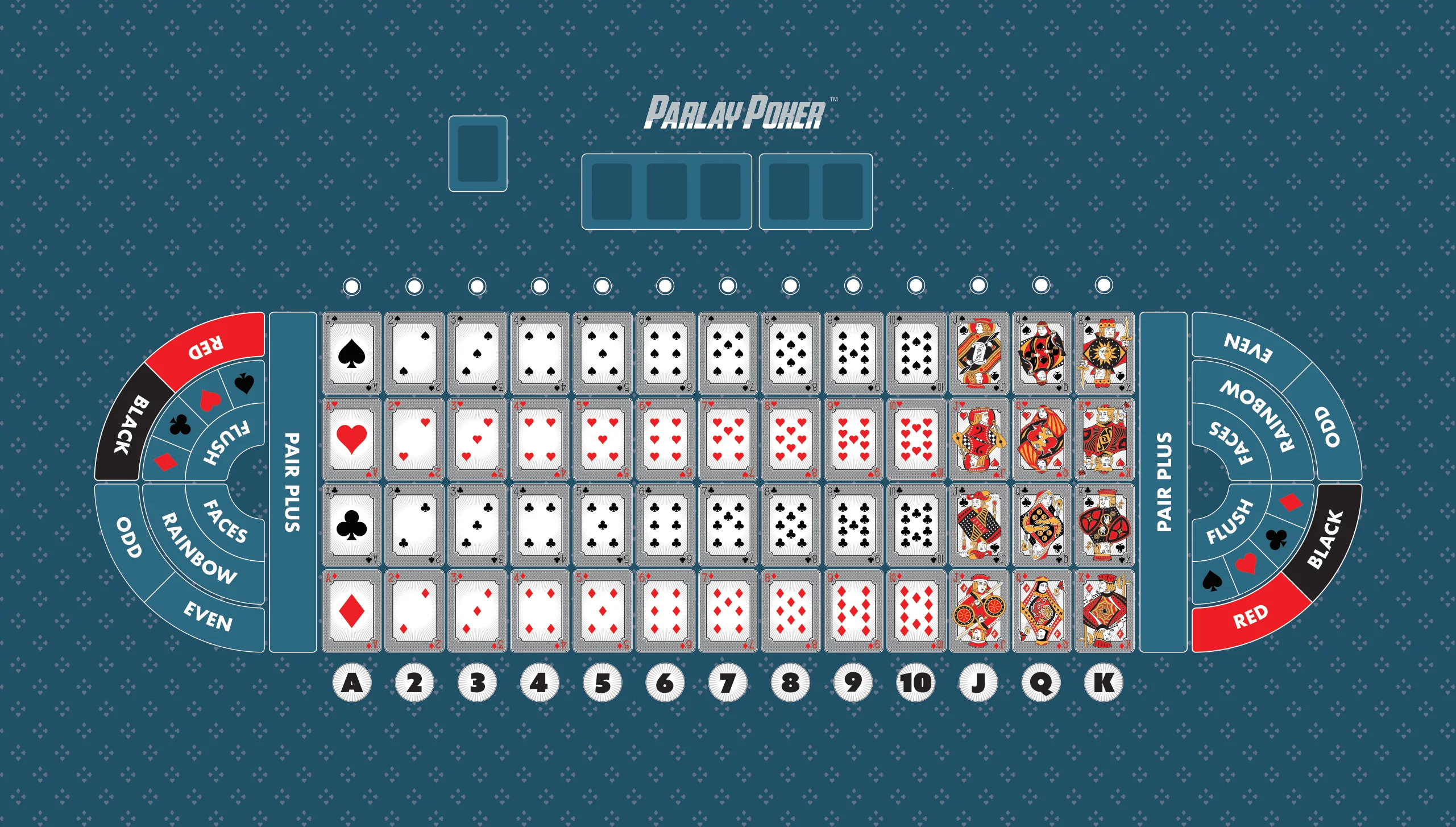
The Parlay Poker layout
  1. Players wager on the outcome of a three card flop.
  2. Bets close, a single card is drawn and its rank designated as the bonus trigger.
  3. A three card flop is dealt from a separate deck and, if a card of the trigger rank appears, two additional cards are dealt extending the hand to five cards.
  4. This ends the round and all wagers are settled.
Novelty in a Familiar Format

Roulette players sit down already knowing the basics. As the first cards fall, they quickly discover that the layout offers a far richer experience.

More to Bet On

Card combinatorics produce a wide range of wagers, each with a different volatility profile and house edge. Some work as the heart of the game while others feel like exciting side bets, giving every betting style something to like and a reason to play.

Multiple Winning Spots

Every flop puts three winning cards on the layout, plus whatever hand they make, so a single round can pay several bets across the table at once. Roulette players notice it on the first hand.

Tiered Payouts

The corner, rank, & split bets differ from the roulette experience by offering escalating tiered payouts based on how many of their cards appear in the hand.

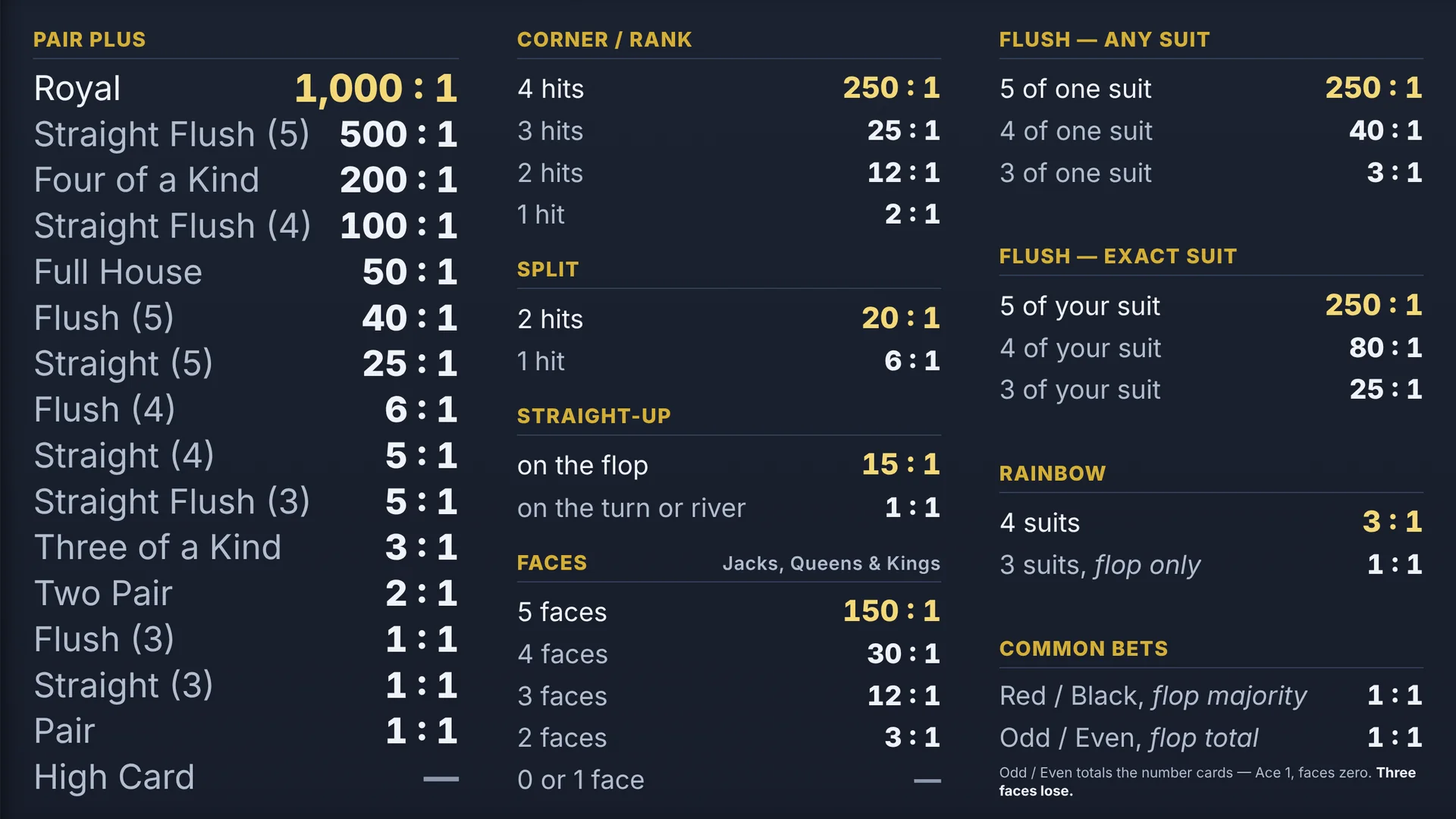
On the Standard band a Corner pays 2 to 1 for one card and climbs to 250 to 1 when all four land.

The Bonus

Before each hand, a card is drawn and its rank is designated as the bonus trigger. If the rank appears in the flop, an additional 2 cards are dealt, extending the hand to 5. The bonus occurs about one hand in five.

ImageThe pay table frame from the Parlay Wall, Standard band

Top-Line Payouts

A royal flush pays 1,000 to 1 on the Standard band, which gives the table the kind of headline number slot and progressive players look for, while the edge across the layout stays in table-games territory.

Curb Appeal

A game of beauty designed to draw players in. A shared hand with shared drama creates a social experience. On a busy night the table sounds like a craps game on a hot roll.

Learning the Game

An intuitive learning curve lets players find their betting style quickly. The layout suggests roulette and they can dive in with exploratory bets. The first hand reveals the wealth of possible outcomes and the excitement of betting on all the possibilities.

Dealing

Your dealers' roulette skills carry over to this game and the layout handles in a nearly identical way. The differences come from managing multiple winning spots and tiered payouts.

Our carefully designed training procedures and a simulator built on the same engine as the demo bring dealers to rapid proficiency.

Pace

There are no player decisions once the bets close and no spinning wheel. By design, the phases of the game mirror roulette with similar duration and pacing.

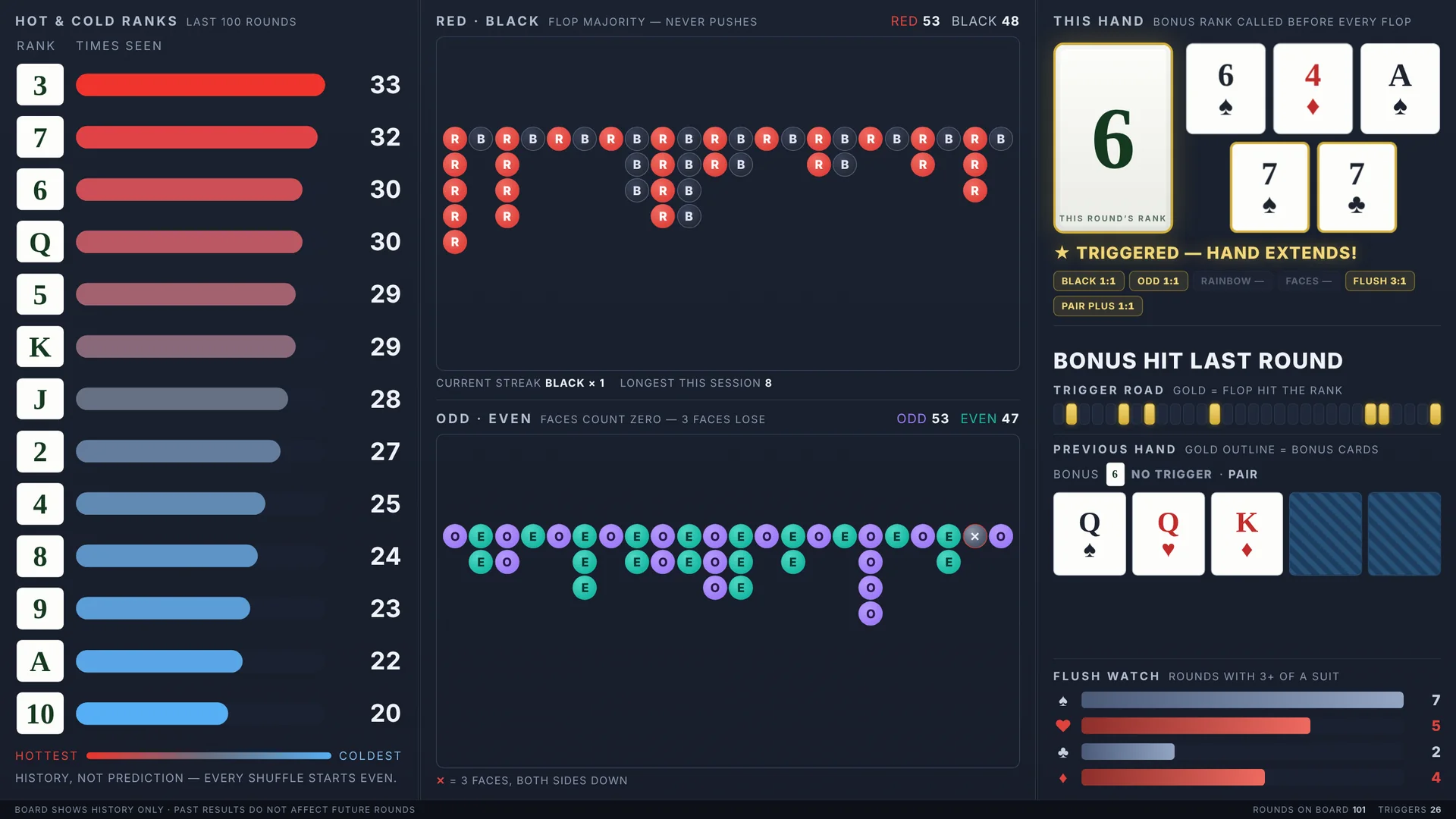
The Parlay Board: hot and cold ranks, red and black and odd and even roads, the current hand and the trigger road

Pay Tables

Every pay table comes in three bands and is individually tunable. Realized RTP follows the mix your players settle into, similar to craps.
The pay table side of the Parlay Wall, Standard band

Rules

Common bets pay 1 : 1 and resolve on the flop only. Red / Black pays on the majority colour of the three flop cards. Odd / Even pays on the total of the three flop cards. Aces count as one, face cards count as zero, and three faces lose.

A common bet does not ride alone: a player holding Red, Black, Odd or Even must have other wagers on the layout totaling at least their largest single common bet. The common bets are priced at even money, and Odd on its own runs a hair in the player's favour; that asymmetry is why the rule exists, so a player's position as a whole is always priced for the house.

Card bets. Straight-Up is one card and pays when that exact card is on the flop, and at even money when it comes on the turn or river. Split covers two adjacent cards on the layout, Corner covers four, Rank covers all cards of the same rank.

Hand bets. Faces pays on the number of face cards in the hand, from two up. Flush pays on three, four or five cards of one suit, with a separate schedule for naming the suit. Rainbow pays on three suits on the flop, and more on all four suits in an extended hand.

Pair Plus pays on the best poker hand the cards make, from a pair up to a royal, with the extended tiers reachable only when the hand goes to five cards. Three cards of one suit anywhere in the hand pay as a three-card flush.

Tap a bet to see the House Edge

Parlay PokerStandard band · card and hand bets 4.65% to 6.53%
Even money Card and hand bets
Craps17 prices · 0.00% to 16.67%
Regular bets Long odds
RouletteDouble zero · 2 prices · 5.26% to 7.89%

House edge, one line per price. Taller lines mean more wagers share that price.

Parlay Poker on the Standard band, October 2026 pay tables. Craps with buy and lay commission on wins and the field paying double on 2 and 12 (faint line: triple on 12). Roulette on a double-zero wheel.

Common bets paying even money require a companion wager by rule.

House Edge / RTP

Every wager on the layout carries its own house edge, as it does in craps.

Standard band, card and hand bets4.65% – 6.53%
Return to player on those bets93.47% – 95.35%

Roulette's 5.26% falls inside that range. The even-money bets sit below it, and by rule a player can only bet them alongside a companion wager.

Standard band, maximum obtainable RTP98.86%
Without the Red and Black pair98.48%

Red and Black together return exactly what is bet on every round, so the pair adds nothing to a player's return but pulls the computed average toward 100%. The second figure is the one a player can actually reach. The Tight and Player-Friendly bands move every price down or up from there, and all three are in the GLI letter.

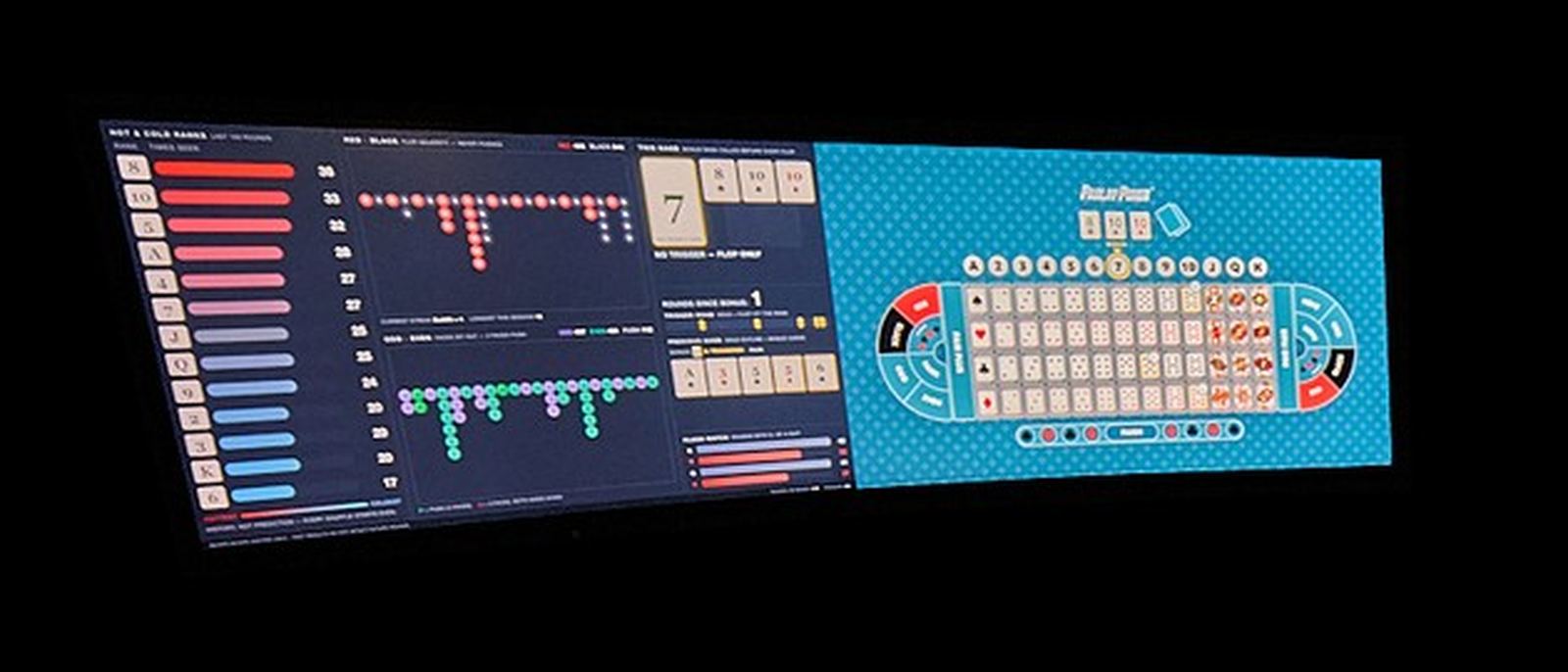
The Parlay Wall

Equipment

The layout is slightly larger than a blackjack table and smaller than a roulette table. The game runs on standard equipment: standard card decks, roulette chips & dollies, a card shuffler.
Game Protection

Game protection is similar to roulette and calls for similar procedures to thwart cheating (past posting, etc). Because all wagers are placed before cards are dealt, no advantage play is possible.

Status

  • The mathematics are certified by GLI
  • Patent pending
  • Debuted at G2E 2026
  • Runs on standard equipment
  • Dealer training simulator
  • Playable demo with statistical analytics engine

Parlay Poker is designed and developed by Jazz Tigan at Lockhart Laboratories in Nevada.

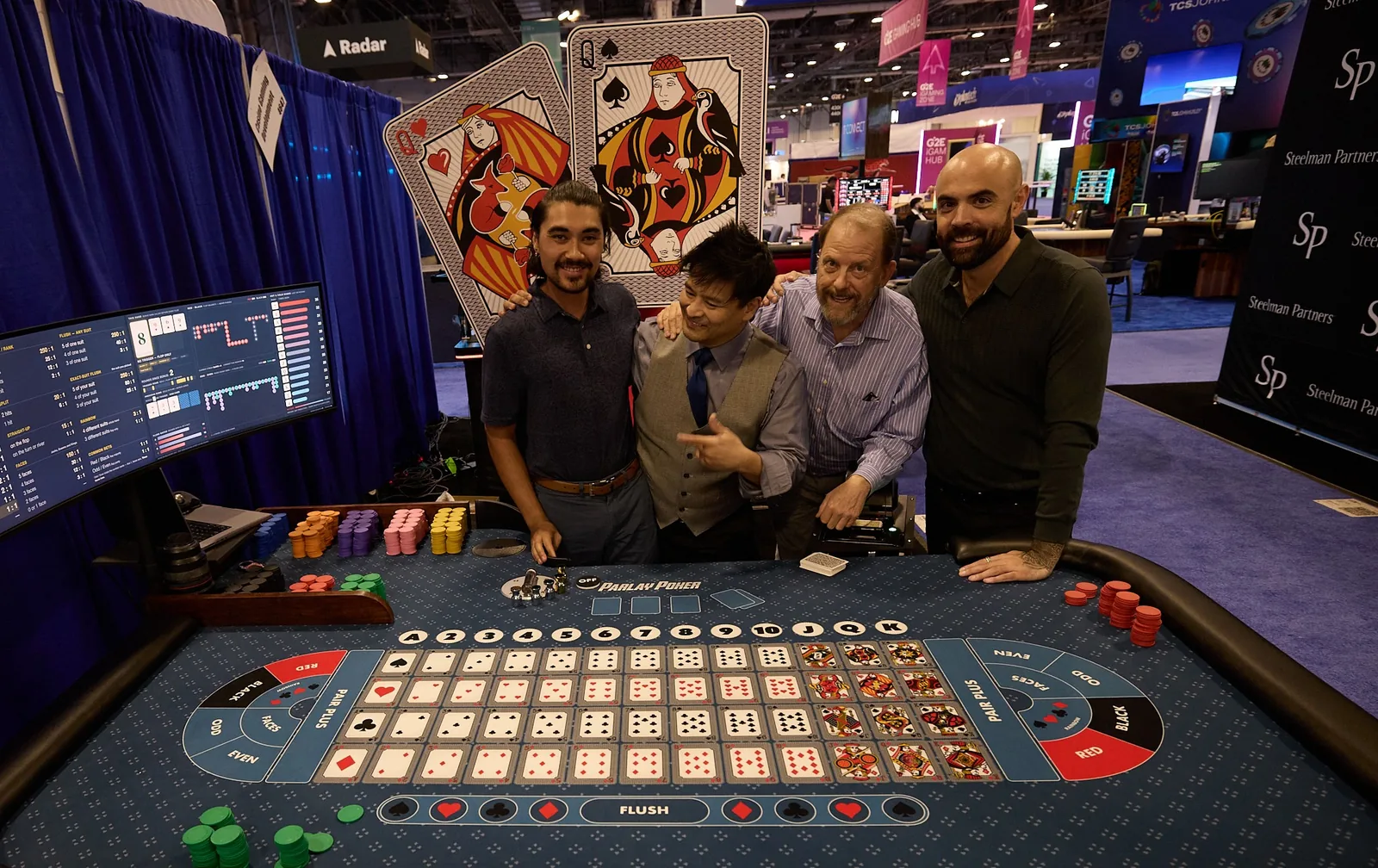
The Parlay Poker table and crew at booth 4647, G2E 2026

Let's Talk

I'd love to show you how all of this adds up on your floor.

Request materials
  • The GLI certification letter
  • Full pay tables for all three bands
  • Monte Carlo Analytical Engine
  • In-depth math analysis
  • Rules of play and dealer procedures
  • Dealer training simulator access
Jazz Tigan · Lockhart Laboratories
For Operators